Vehicles in GTA VI are not only a catalogue of models. They connect the scale of Leonida to the player, carry Jason and Lucia through quiet conversations and become the center of police pressure when a plan collapses.
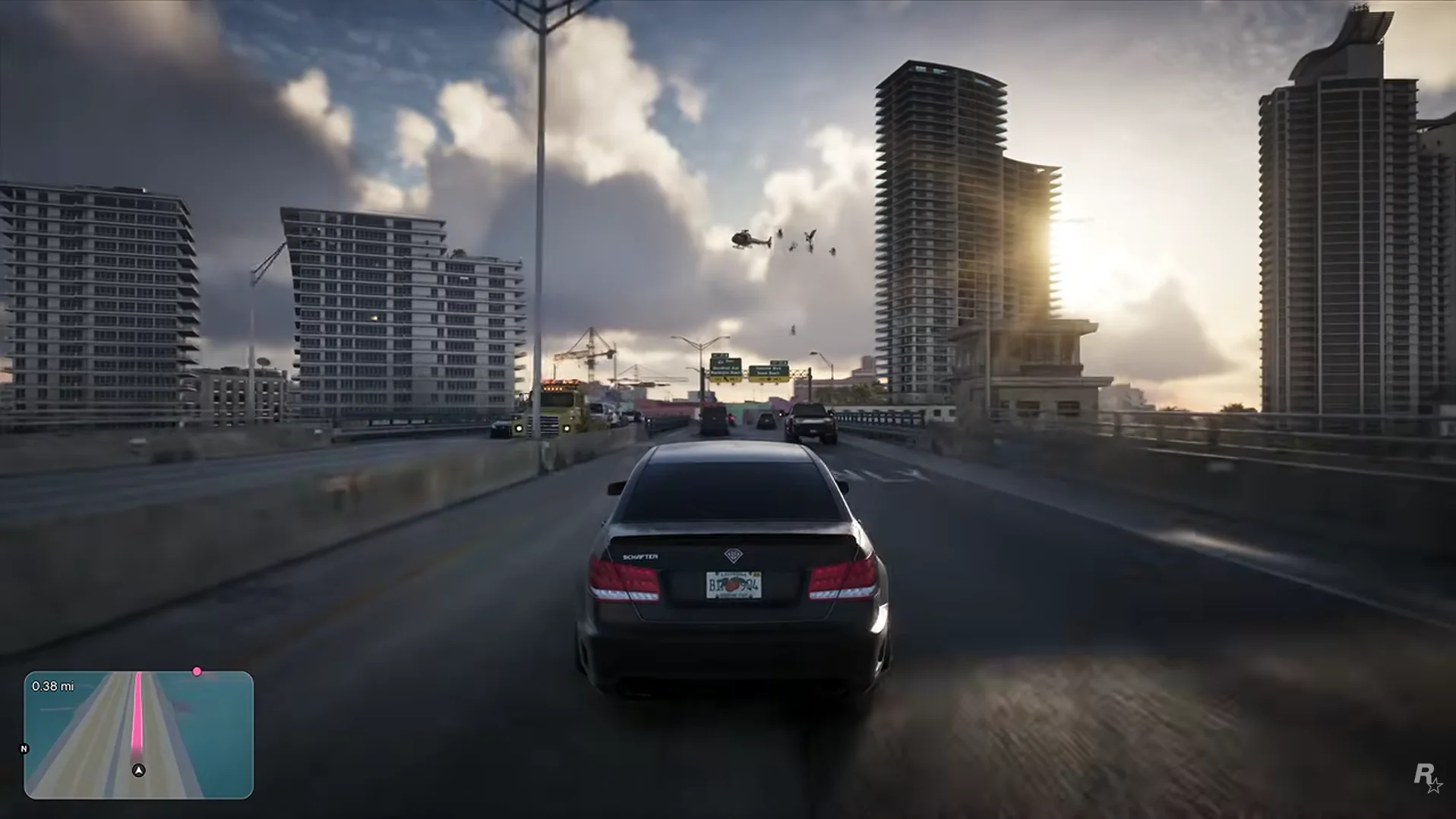
The available footage is best read as a study of the whole driving environment: the cabin, camera, traffic, road and pursuit response all need to work together.
Detailed interiors support more than first-person novelty
Buttons, vents, gauges and climate controls have distinct shapes and surfaces. The driver's hands align with the steering wheel, while the windshield preserves a readable street beyond a darker cabin.
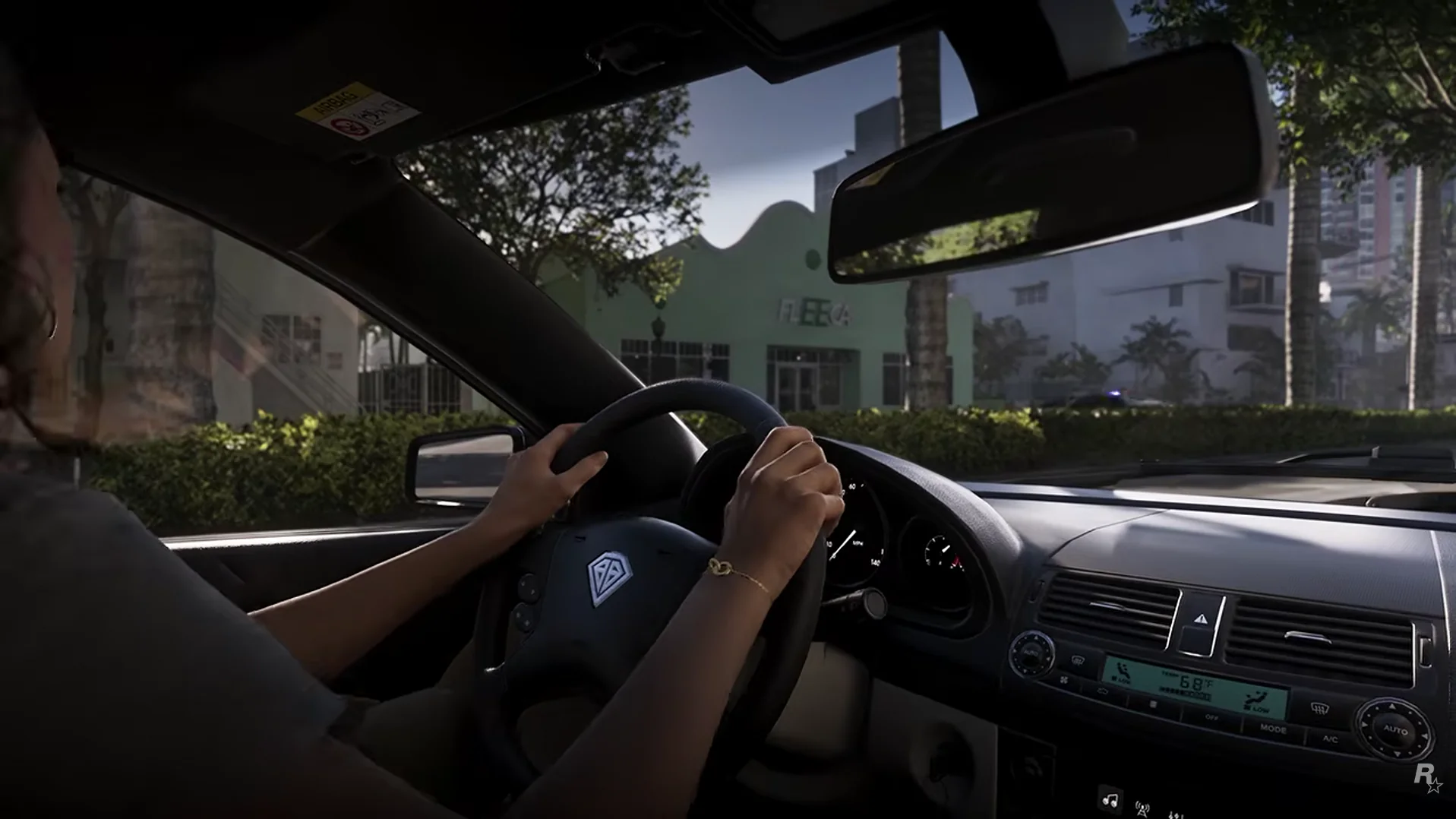
Even players who prefer third person benefit from this work. Interior detail supports conversations, mission staging and the short transitions where characters enter, wait inside or react to events outside the vehicle.
Traffic makes speed meaningful
The highway contains commuters, larger vehicles and construction activity across several lanes. Cars are separated enough to make a route readable without leaving the road empty for the protagonist.
Traffic behavior will matter more than visual density. Lane changes, reactions to collisions, congestion and differences between urban and rural roads will determine whether driving feels like navigating a place or moving through animated scenery.
Leonida's roads may create distinct driving rhythms
Vice City offers broad streets, elevated highways and dense intersections. The Keys suggest long bridge runs with limited alternatives. Grassrivers and Mount Kalaga introduce water, trails and rougher ground.
A varied map does not need every vehicle to perform equally everywhere. The most interesting design would make choosing a boat, off-road vehicle or fast road car a response to geography rather than a cosmetic preference.
Police pressure is layered vertically
In the four-star scene, a police SUV blocks part of the route while a helicopter sits close to the player's aim. The street includes debris, other vehicles and buildings that limit clean escape lines.
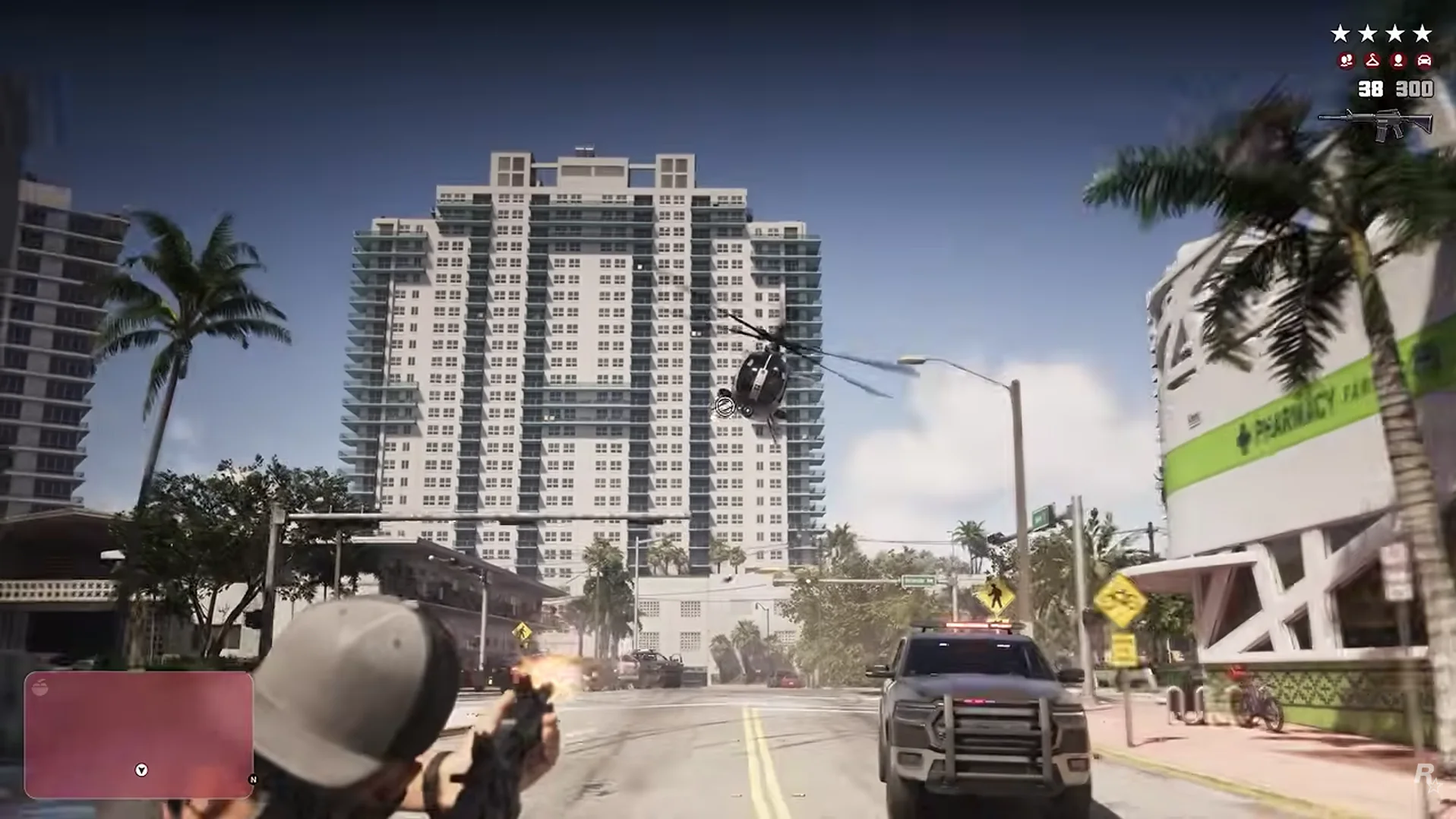
This composition suggests pursuit as a spatial problem, not merely a stream of police cars. Search tactics, escalation and artificial intelligence still require longer demonstrations.
What footage cannot tell us about vehicle feel
Motion blur, camera shake and suspension animation can suggest speed, but edited footage cannot reproduce steering response in the hand. Questions about traction, deformation, damage and vehicle mass remain open.
The right time for a driving verdict is after sustained unedited play. For now, the evidence supports a narrower conclusion: Rockstar has built roads and cabins to make travel visually central to Leonida.
Sources checked