A useful footage breakdown should not become a minute-by-minute transcript. The point is to identify scenes that change what we understand about the world, then connect details that are separated by editing.
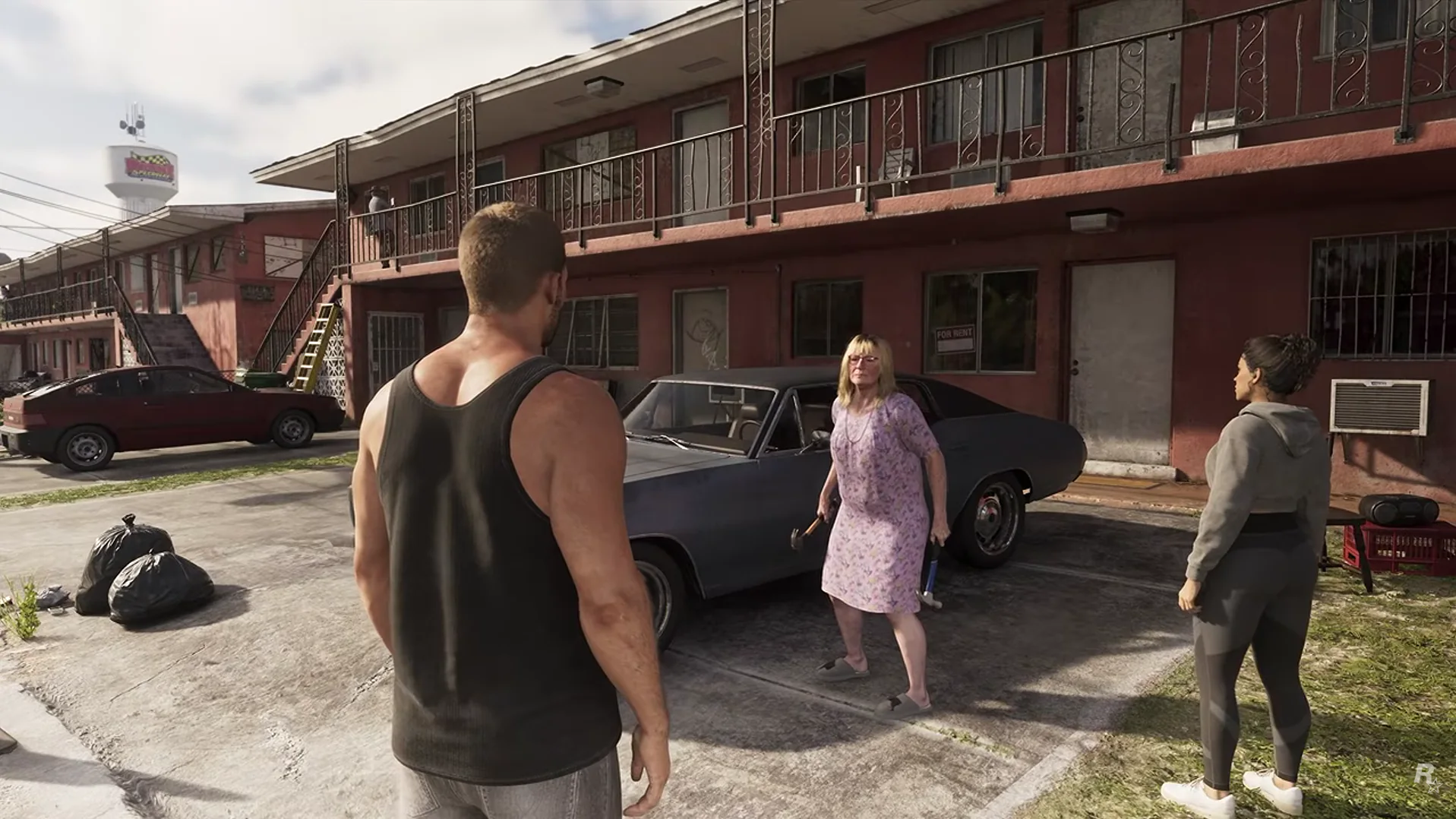
The strongest pattern across the footage is contrast. Leonida moves between wealth and worn property, crowded tourism and quiet water, controlled exercise and sudden violence. Those contrasts give the setting more shape than a list of easter eggs.
The motel establishes a street-level baseline
The motel is filled with functional details: external stairs, window units, parked cars, rental signage, bags near the curb and small plants breaking through edges. Nothing is presented as a landmark.
That ordinariness is important. If Vice City only existed through beaches and towers, the spectacle would lose contrast. The motel provides a believable economic and visual baseline for Jason's daily world.
The car scene makes silence part of the relationship
Jason looks forward while Lucia looks toward him. Neither character needs a dramatic pose for the frame to feel active. The gap between their attention becomes the subject.
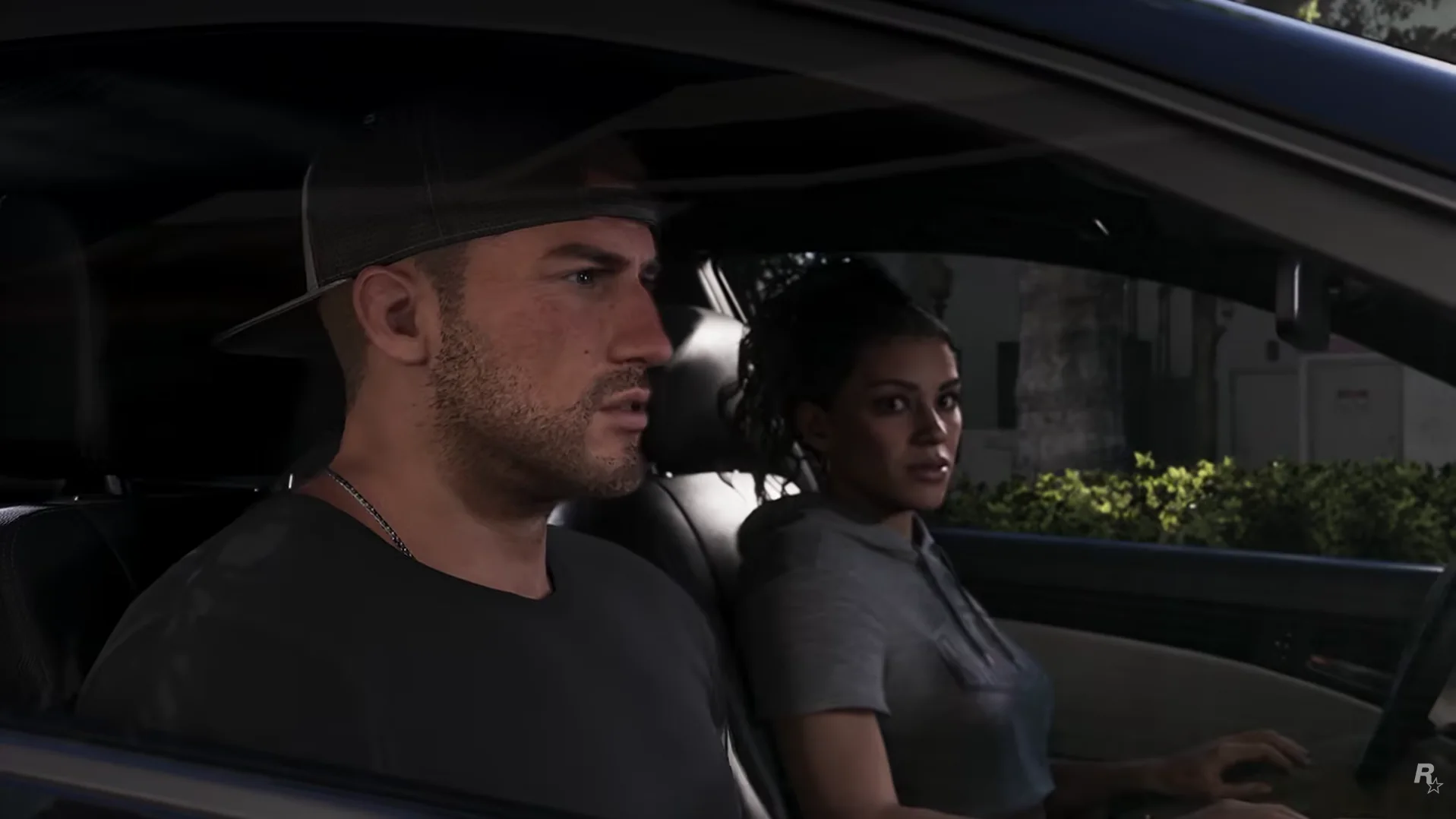
The cabin also shows why vehicle detail matters to storytelling. Seats, glass and exterior greenery hold the characters in a specific private space rather than placing two faces against a generic background.
The highway shifts from cinematic observation to player information
The highway view contains the clearest navigation language: player car, route, distance and traffic arranged around a familiar chase camera. Weather and low sunlight remain visually strong without hiding the road.
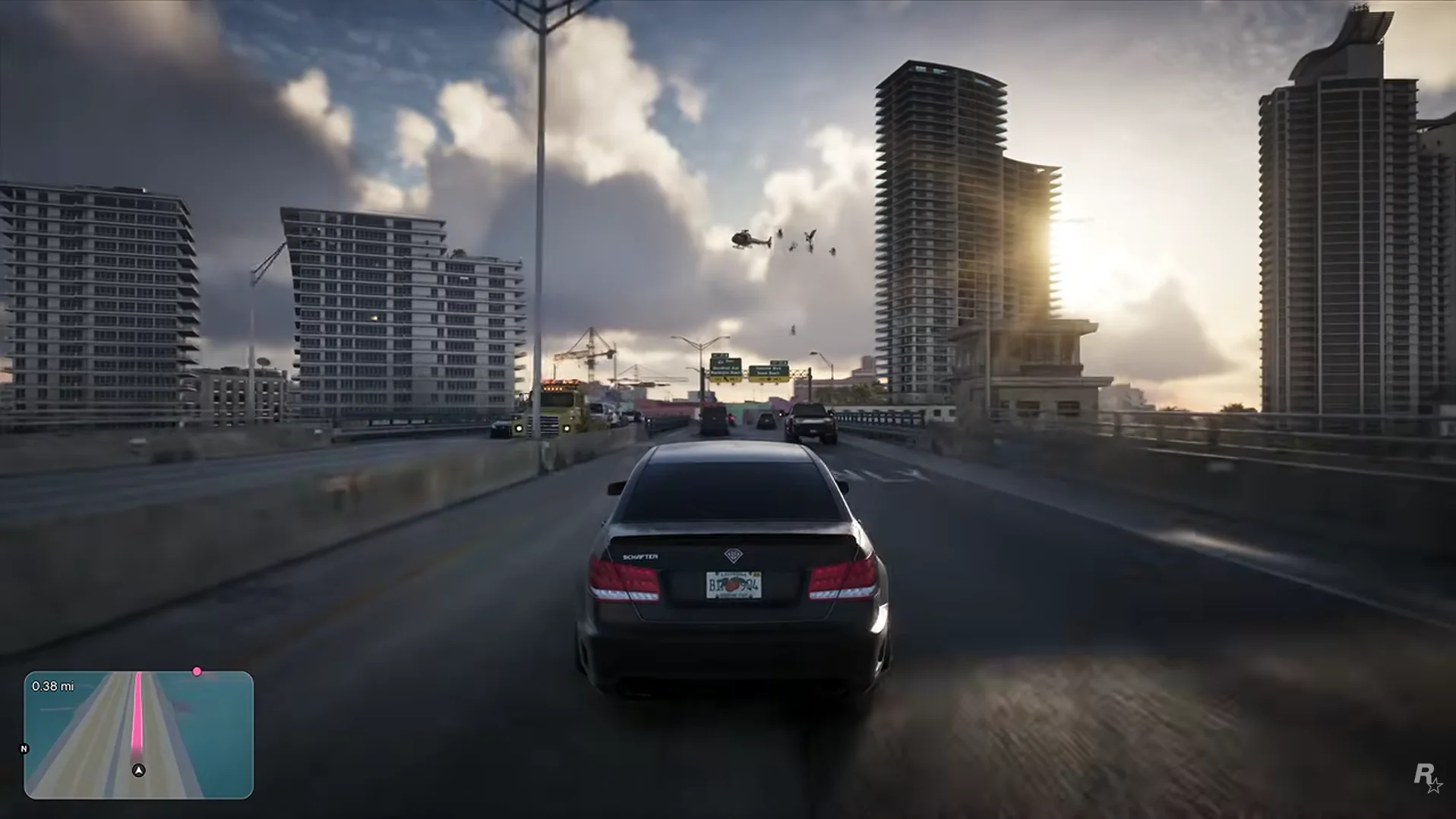
The scene confirms more than the existence of cars. It demonstrates how the interface and environment are expected to share the screen during ordinary travel.
The robbery communicates partnership through position
Lucia stands closest to the camera, face covered, with Jason positioned behind her. Shelves, signs and low fluorescent lighting make the room feel cramped.

The arrangement tells a small tactical story. They are together, but they are not performing the same task. That division is a more useful clue about partnership than treating the scene only as proof of robbery missions.
Public life expands the world beyond the protagonists
Beaches, clubs, gyms, airports and fishing areas contain people whose actions do not revolve around Jason or Lucia. The density changes by location, which keeps the world from feeling uniformly crowded.
Ambient characters provide scale and social context. Their deeper value will depend on variation and reaction during play, but the footage shows that Leonida is being staged as an inhabited state rather than an empty route between missions.
The final logo frame resets the emphasis
After so many detailed environments, the logo returns the footage to a simple identity. The gradient carries Vice City's sunset and nightlife colors while the familiar type remains heavy and readable.

For the game, that visual balance is effective because it combines a specific place with an established series. For a news site, imagery should remain supporting evidence inside editorial coverage rather than becoming a substitute for independent identity.
The footage's real message is range
No single sequence explains GTA VI. The material moves from close facial performance to distant skylines, from still water to a four-star pursuit and from worn housing to polished private spaces.
That range is the reason to analyze scenes together. Separating every frame into its own page removes the contrasts that make Leonida interesting and produces less insight, not more.
Sources checked