Grand Theft Auto VI is scheduled for November 19, 2026 on PlayStation 5 and Xbox Series X|S. That simple sentence sits beneath years of changing windows, two delays and a growing list of practical questions about editions, preload timing and a possible PC version.
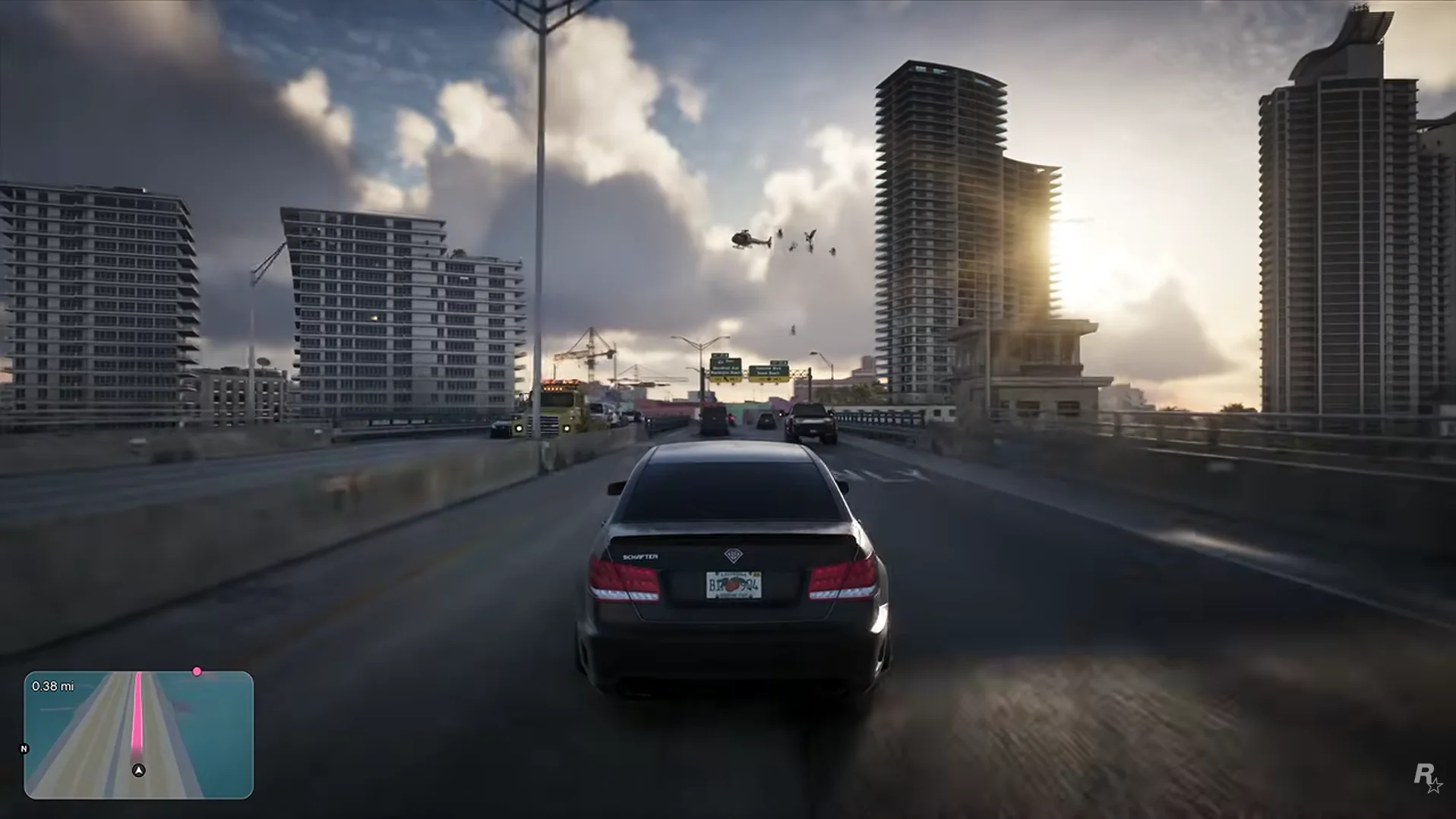
This guide is built for the player making an actual decision. It separates the launch details that can be planned around from the questions Rockstar has not answered, then explains where waiting may be more sensible than buying immediately.
The date I can finally put on the calendar
I have watched Grand Theft Auto VI dates move often enough to treat every new calendar entry with caution. The first trailer pointed toward 2025. Rockstar later moved the game to May 26, 2026, and then confirmed another delay. Today, the date that matters is November 19, 2026. It appears on Rockstar's official GTA VI site, in Rockstar support documentation, in Take-Two investor material, and in the current preorder campaign. That does not make the wait shorter, but it gives me something more useful than a rumor from an anonymous account. It gives me a date that the companies responsible for making and publishing the game are willing to place in public documents.
The sequence matters because an old article can still look authoritative after its facts have expired. Search results continue to surface the original 2025 window and the abandoned May 2026 date. I have therefore learned to check the publication date, the update date, and the source behind every confident headline. For this guide, I am treating November 19 as the operative launch date because it is the latest official position available on August 30, 2026. If Rockstar changes it again, the responsible response is not to pretend the earlier reporting never existed. I will update the page, record the new review date, and explain what changed.
There is a human side to that date as well. GTA V arrived in September 2013, so an entire generation has grown up during the distance between numbered releases. Some readers were children when they first drove through Los Santos and will be working adults when they enter Leonida. I do not think anticipation can be measured only by trailer views or preorder totals. It lives in the ordinary planning around the game: deciding whether to replace an aging console, arranging time away from work, avoiding spoilers, and wondering whether friends who once played together still have room in their lives for one more midnight launch. November 19 is a business date, but it is also a rendezvous for millions of private histories.
What Rockstar is actually promising
When I strip away the fan maps, alleged leaks, and frame-by-frame theories, Rockstar's central promise is surprisingly focused. Grand Theft Auto VI follows Jason Duval and Lucia Caminos after an easy score goes wrong and pulls them into a criminal conspiracy across Leonida. Vice City is the gravitational center, but the official world extends into the Leonida Keys, Grassrivers, Port Gellhorn, Ambrosia, and Mount Kalaga National Park. Rockstar describes the game as the biggest and most immersive evolution of the series. That phrase is marketing language, but the named places and protagonists are concrete details that can be checked.
I am careful with the word immersive because it can become a container for anything a hopeful player wants. It does not confirm that every building can be entered. It does not establish a precise map area, a particular police simulation, or a list of survival mechanics. The extended look released on August 27 was captured from in-game footage on PlayStation 5, according to Rockstar. That tells me the presentation is grounded in a running console build, but it still does not turn every animation in a promotional edit into a guaranteed systemic feature. A crowd scene can demonstrate density without proving that every person follows a persistent daily routine.
My method is simple. I separate what the material shows from what I think it might mean. I can say that Rockstar has shown crowded beaches, wetlands, highways, nightclubs, convenience stores, law enforcement activity, boats, aircraft, social media clips, and a wide cast around Jason and Lucia. I can say the footage suggests a world interested in the collision between private crime and public spectacle. I cannot responsibly convert those images into a complete feature list. The distinction may feel conservative, but it protects the reader from a familiar cycle in game coverage, where expectation hardens into assumed fact and assumed fact later returns as outrage.
The platform reality at launch
The confirmed launch platforms are PlayStation 5 and Xbox Series X|S. I include the vertical bar because it matters: Series X and Series S belong to the same current Xbox family, even though their hardware profiles differ. Rockstar's store and support pages list the current consoles, while Take-Two's release material repeats the same platform plan. I have found no official launch announcement for PlayStation 4, Xbox One, Nintendo hardware, macOS, or PC. For a purchase decision, absence from that list matters more than a retailer placeholder or an industry commentator's prediction.
This is the moment when many readers ask which console version will be best. I cannot answer that honestly before independent testing. Rockstar's official pages currently carry PlayStation promotional language, including a statement that the game plays best on PlayStation 5, and the extended look was captured on that platform. Commercial partnerships are part of modern launches, so I do not treat a promotional badge as a substitute for measured frame rate, image quality, loading time, input latency, or feature comparisons. Until reviewers can test retail code on several machines, the defensible answer is that both console families are confirmed and detailed performance differences remain unverified.
The Xbox Series S deserves particular restraint because online discussion often treats it as either a miracle or a disaster before evidence exists. The machine is officially supported. That is the confirmed fact. Resolution targets, visual cutbacks, storage size, and frame rate modes require direct information or testing. The same applies to the base PlayStation 5, PlayStation 5 Pro, and Xbox Series X. A trailer can reveal artistic ambition, but it cannot tell me how a day-one build behaves after several hours of play. I would rather publish a useful comparison after launch than manufacture a verdict while the hardware is still waiting for the software.
The PC question I cannot answer with a date
For readers who play primarily on a computer, the missing PC announcement is not a footnote. It changes whether they can join the launch at all. As of this review, Rockstar has not announced a PC version of GTA VI. The official platform list names PlayStation 5 and Xbox Series X|S. I know why many players expect a later PC edition. GTA V and Red Dead Redemption 2 both reached PC after their console debuts, and Rockstar continues to support PC releases. History makes a later version plausible. It does not produce a date, a specification sheet, or a guarantee.
I have seen speculative PC dates presented with the confidence of a train timetable. Some estimates use the delay between earlier Rockstar console and PC releases. Others rely on earnings windows, job listings, or comments from hardware companies. Those clues may support analysis, but they do not cross the line into an announcement. I will not tell a reader to buy a new graphics card for a game whose PC requirements do not exist. I will not publish a countdown to an invented Steam release. The right answer today is shorter and less satisfying: PC is unconfirmed, and anyone who wants to play on November 19 needs to consider one of the named consoles.
That restraint matters because the missing platform encourages bad information. I have already seen invented system requirements, unsupported release windows, supposed beta access forms, and confident claims based on nothing more than the history of earlier games. None of them can replace a platform announcement. I will cover a PC edition when there is primary evidence to report. Until then, this page will keep the gap visible instead of filling it with a convenient prediction that may be copied across the web as fact.
Preload, launch night, and the limits of preparation
Rockstar Support says digital preorder customers can begin preloading on November 12, 2026 at local midnight. The physical version is unusual enough to deserve attention: official support material describes a code in the box rather than a game disc, with the package available in time to support the same preload period. For collectors, that distinction matters. A box on a shelf is not the same thing as an archival copy on optical media. For players with slower internet connections, it also means the physical route does not remove the need for a large download.
I would still avoid treating preload as a promise that every player enters Vice City at the same perfect second. Store authentication, launch patches, regional unlock timing, account traffic, and home network conditions can complicate even a carefully prepared evening. The practical checklist is ordinary: confirm storage space, update the console system software, verify the account and payment region, secure access to the email or phone used for two-factor authentication, and avoid deleting another game until the final download size is known. I will update this guide when Rockstar publishes exact storage requirements and launch timing for each region.
There is a temptation to turn launch preparation into an expensive ritual. New television, new headset, upgraded storage, collector accessories, and a week of leave can quickly cost more than the game. I prefer to begin with the bottleneck that can actually be demonstrated. If the console has enough free space, the display works reliably, and the network can complete the download, the essential preparation is done. Everything beyond that is a personal luxury, not an entry requirement. The most valuable preparation may be social rather than technical: deciding how to handle spoilers and whether the first playthrough will be private, streamed, shared, or discussed in a group chat.
What I see when I look past the preorder glow
Rockstar currently sells Standard and Ultimate editions. Take-Two's June 2026 announcement placed the Standard edition at 79.99 US dollars and the Ultimate edition at 99.99 US dollars, while regional prices vary. The Ultimate package adds vehicles, weapons, clothing, and other benefits connected to Jason and Lucia's story. Preorders and purchases made before November 20 include the Vintage Vice City Pack, and eligible digital preorders include one month of GTA+. Those details are current official offers, not permanent laws. Retail availability, taxes, currencies, and platform terms can differ by country.
I do not think a guide should convert a feature list into a universal recommendation. A player who wants only the main story may find the Standard edition complete. A collector who values cosmetic items and convenience may prefer the Ultimate edition. The useful question is not which package has the longer bullet list. It is whether the extra items change the part of the experience that the buyer actually values. Because several bonuses are digital and woven into progression, I also want to know how they affect the early game before calling them harmless decoration or essential equipment.
Preordering is a decision about certainty. It can secure bonuses and let the download finish early, but it also asks the buyer to commit before independent reviews and performance tests exist. I understand the emotional appeal. GTA VI is not an unknown project trying to find an audience. It is probably the most anticipated entertainment release of its year. Even so, scarcity is less persuasive for a digital product than for a genuinely limited physical object. My own recommendation is to preorder only if the confirmed platform, edition contents, refund terms, and current evidence are already enough for the decision. Hype should not be mistaken for missing information.
Why the delay is part of the story
A delay is usually reported as a movement between two dates, but the consequences spread far beyond a calendar. Marketing plans move. Retail campaigns change. Developers and contractors continue working under a new public deadline. Players recalculate purchases and leave requests. Publishers revise financial expectations. When Take-Two discussed the November 2026 date in its results, it placed GTA VI inside a much larger forecast about bookings and fiscal performance. That is a reminder that the game is both an artistic project and a financial event with unusual weight.
I cannot see inside Rockstar's production process, so I will not romanticize a delay as proof that every employee receives more humane working conditions. Extra time can improve a game, but it can also mean a longer period of intense work. Public statements tell us the schedule, not the lived experience of every person building the project. The responsible position is to hope that the additional months produce stability and polish without inventing a workplace story unsupported by reporting. If credible labor reporting emerges, it deserves its own careful coverage rather than a paragraph of assumptions in a release guide.
For players, the delay may ultimately be remembered only if the launch goes badly. A polished release turns waiting into a footnote. A broken release turns every postponed date into evidence in a larger argument. GTA VI faces a scale problem here. The audience will test combinations of behavior no internal team can completely reproduce. People will ignore mission markers, create traffic disasters, push physics systems, fill streets with chaos, and search every boundary. The standard is not literal perfection. It is whether the game remains convincing when millions of curious players pull at its seams.
The world I can already recognize without pretending I have visited
Vice City returns as a fictional mirror of Miami, but the announced geography extends across Leonida, Rockstar's version of Florida. The official material moves from bright beaches and luxury towers to wetlands, industrial settlements, roadside businesses, islands, and national park country. That variety matters more to me than an unverified claim about square miles. A compelling open world is not simply large. It creates meaningful transitions, local rhythms, and reasons to remember where one place ends and another begins.
The footage is crowded with phones, livestreams, surveillance images, news clips, parties, police cameras, and people performing for an audience. I read that as a clue to the game's satirical target. GTA V examined celebrity, finance, technology, and the entertainment economy of early 2010s Los Angeles. GTA VI arrives in a culture where public identity is constantly recorded, edited, monetized, and judged. Jason and Lucia are trying to survive a criminal conspiracy in a state where almost every foolish act can become content. That is my interpretation of the published imagery, not a confirmed system description.
I am equally interested in the quieter scenes. A motel room, a conversation in a car, a look exchanged before a robbery, or a road stretching through humid darkness may carry more narrative weight than a spectacular chase. Rockstar's strongest worlds often work because the excess has a counterpoint. The player remembers the gunfight, but also the long ride that made the distance feel real. With two protagonists bound by trust and risk, GTA VI has an opportunity to make travel and silence part of the relationship. The trailers suggest that possibility. Only the completed game can prove it.
The blank spaces I am leaving blank
Several questions remain open. Rockstar has not published final console performance targets, complete accessibility settings, storage requirements, a comprehensive radio list, the full mission structure, or a PC release plan. The company has not provided an official map area that can settle every size comparison. Online plans are especially important and especially easy to overstate. GTA+ appears in preorder marketing, but that does not give me permission to invent the structure, launch timing, economy, or technical relationship of a future GTA VI online experience.
I keep those spaces visible because uncertainty is useful information. A reader deciding between consoles may need performance analysis. A player with a disability may need confirmed control remapping, subtitle, visual, hearing, or difficulty options. A household with limited bandwidth needs the real file size. A PC player needs an actual platform announcement rather than a projected date. Saying that a fact is unknown can save money and prevent false confidence. It also creates a clear reporting plan: each missing item becomes a question to revisit when Rockstar, storefronts, reviewers, or the released game provide evidence.
There will be pressure to fill every silence as launch approaches. Screenshots will be cropped, patents will be rediscovered, resumes will be interpreted, and anonymous messages will be packaged as certainty. Some of that investigation can be valuable. Much of it will exist because the demand for daily GTA VI content is larger than the supply of daily GTA VI facts. GTAVIMOD.COM will not win that race by publishing the most. I would rather publish fewer pieces that still make sense when a reader returns months later. The archive should document the road to Leonida, not become a landfill of expired predictions.
My position before the road opens
If nothing changes, Grand Theft Auto VI launches on November 19, 2026 for PlayStation 5 and Xbox Series X|S, with preload beginning November 12 for eligible digital preorders. The current official materials support those statements. They do not support a PC date. They do not support a promise about a particular frame rate on every console. That compact summary is less dramatic than most speculation, but it is the foundation on which useful coverage can grow.
I will approach launch as both a player and a reporter. I want to feel the surprise of entering Vice City without turning the experience into a spreadsheet, but I also want to test what the site eventually recommends. Guides should be based on repeatable observations. Platform comparisons should use measured results. Corrections should remain visible through update dates. The purpose is not to drain mystery from the game. It is to make practical claims accountable.
For now, the road ends at a date on a screen and a set of official images glowing like postcards from a place that does not yet exist on my console. That distance is part of the fascination. We know the names Jason, Lucia, Vice City, and Leonida, but we do not yet know the texture of an ordinary hour there. On November 19, if the schedule holds, marketing language will finally meet millions of unscripted players. Until then, I am keeping the confirmed facts close, the unanswered questions open, and my expectations ambitious without pretending they are evidence.
Sources checked